Zum Inhalt springen

Warenkorb

Dein Warenkorb ist leer

Signup for our newsletter

Describe what your customers will receive when subscribing to your newsletter.

Artikel: The NOIR.DESIGN Finishing Process: From Raw Wood to Heirloom Quality

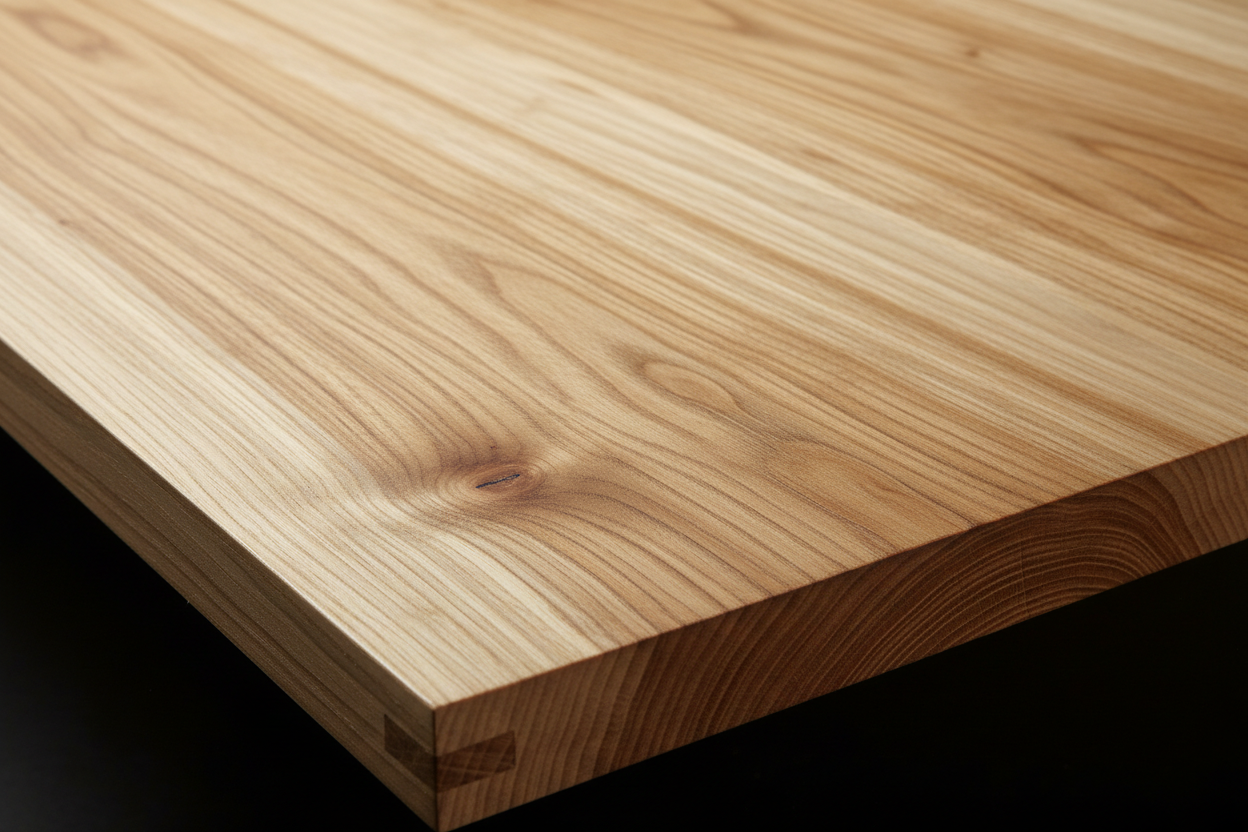
Premium hardwood finish showcasing NOIR.DESIGN's two-tone Nordic aesthetic and grain detail
chestnut sealer

The NOIR.DESIGN Finishing Process: From Raw Wood to Heirloom Quality

Our Complete Workflow Revealed

Throughout this series, we've explored Osmo Hardwax Oil, Rubio Monocoat, and Chestnut sanding sealer individually. Now it's time to show how these premium products work together in our complete finishing process at NOIR.DESIGN.

This is the exact workflow we use for our wall hooks, curtain holdbacks, coat racks, towel rails, and decorative pieces. It's the result of years of refinement, countless tests, and a commitment to creating heirloom-quality hardwood pieces that justify our premium positioning.

Philosophy: Why Our Process Matters

Before diving into the technical steps, it's important to understand our philosophy. At NOIR.DESIGN, finishing isn't an afterthought—it's integral to the design. Our Nordic-inspired aesthetic demands that the natural beauty of hardwood takes centre stage, which means the finish must enhance rather than mask the wood.

We've chosen Osmo, Rubio, and Chestnut sealer because they align with three core principles:

  • Authenticity: Natural appearance that celebrates wood grain and character
  • Durability: Protection that lasts decades, not years
  • Sustainability: Environmentally responsible materials and processes

Every step in our process serves these principles.

Step 1: Material Selection and Preparation

Wood Selection: We work primarily with premium hardwoods—oak, ash, walnut, and maple. Each species is chosen for specific aesthetic and performance characteristics. Our two-tone Nordic designs often combine contrasting species for visual impact.

Moisture Content: We verify that all wood is at 8-12% moisture content before machining. Wood that's too wet will shrink after finishing, causing cracks and finish failure. We use a moisture meter to confirm every batch.

Defect Assessment: We inspect for knots, checks, and grain irregularities. Some character is desirable (it's real wood, after all), but structural defects are rejected. This quality control happens before any machining.

Acclimatization: Wood is stored in our workshop for at least 48 hours before processing to acclimate to ambient humidity and temperature. This prevents movement after finishing.

Step 2: Machining and Shaping

Cutting and Shaping: We machine pieces to final dimensions, leaving no material to remove after finishing. All routing, drilling, and shaping happens now because sanding dust from these operations would contaminate a finished surface.

Edge Treatment: All edges are eased with a slight roundover or chamfer. Sharp edges don't hold finish well and are prone to damage. This subtle detail improves both aesthetics and durability.

Final Inspection: Before sanding, we inspect for machining defects, tear-out, or burn marks. Any issues are corrected now—they'll only be more visible after finishing.

Step 3: Progressive Sanding

This is where many woodworkers go wrong. Proper sanding is the foundation of a perfect finish.

Coarse Sanding (80-100 Grit): Only if needed to remove machining marks or level uneven surfaces. We skip this step on well-machined pieces to avoid unnecessary material removal.

Medium Sanding (120 Grit): Our starting point for most pieces. This removes minor imperfections and creates a uniform surface. We use random orbital sanders for flat surfaces and hand-sand contours and details.

Fine Sanding (180 Grit): This is our standard pre-finish grit. It creates a smooth surface without over-closing the wood pores. For pieces receiving sanding sealer, we stop here.

Critical Rule: We never skip grits. Jumping from 120 to 240 leaves scratches that will show through the finish. Progressive sanding ensures each grit removes the scratches from the previous grit.

Sanding Direction: Always with the grain for final passes. Cross-grain scratches will be highlighted by oil finishes.

Dust Removal: After each sanding stage, we remove all dust with compressed air and tack cloths. Dust contamination is the enemy of perfect finishes.

Step 4: Decision Point – To Seal or Not to Seal

This is where we decide whether to use Chestnut sanding sealer. As detailed in our finish comparison guide, we seal when:

  • Working with softwoods (pine, cedar) prone to blotching
  • Applying coloured finishes where even absorption is critical
  • Combining different wood species in two-tone designs
  • Maximum smoothness is required for high-visibility pieces
  • Sealing end grain to prevent over-absorption

For dense, even-grained hardwoods receiving clear finishes, we often skip sealer and apply Osmo or Rubio directly to raw wood.

Step 5: Sanding Sealer Application (When Used)

Surface Verification: We confirm the wood is completely dry, dust-free, and at room temperature (18-25°C).

Application: We apply Chestnut sanding sealer with synthetic brushes or lint-free cloths, working quickly to maintain wet edges. Coverage doesn't need to be perfect—we're sealing pores, not building a finish coat.

Drying: We allow 20-30 minutes for the sealer to dry. The surface should be dry to the touch but not fully cured. Humidity and temperature affect drying time, so we test before proceeding.

Sanding: This is the critical step. We sand with 240-320 grit to remove raised grain and create a perfectly smooth surface. The sealer sands easily without clogging paper. We're looking for a uniform, silky feel.

Dust Removal: Thorough removal of all sanding dust with tack cloths and compressed air. Any dust left will show through the topcoat.

Second Coat (Optional): For very porous woods or when maximum smoothness is required, we apply a second coat of sealer, dry, and sand again with 320 grit.

Final Inspection: We use raking light to check for any imperfections, dust, or uneven areas. This is our last chance to correct issues before topcoat application.

Step 6: Topcoat Selection

Now we choose between Osmo Hardwax Oil and Rubio Monocoat. Our comparison guide details the decision matrix, but here's the quick version:

Choose Rubio when:

  • Ultra-matte, natural appearance is desired
  • Single-coat efficiency matters (production runs)
  • Using coloured finishes or creating two-tone effects
  • Maximum wear resistance is needed

Choose Osmo when:

  • Subtle sheen is desired to enhance grain
  • Working with very porous woods
  • Moisture resistance is critical (bathroom pieces)
  • More forgiving application is preferred

Step 7A: Rubio Monocoat Application

When we choose Rubio, here's our exact process:

Preparation: For Oil Plus 2C, we mix the oil and accelerator in a 3:1 ratio. We mix only what we'll use within 2-3 hours as the mixture has limited working time.

Application: Using white or beige pads, we apply Rubio liberally, working in manageable sections (1-2m²). The key is keeping the surface wet for 5-10 minutes, adding more oil to areas that absorb quickly.

Saturation Check: We watch for dry spots and reapply to ensure complete saturation. The molecular bonding only works when all wood fibres are saturated.

Excess Removal: After the dwell time, we remove all excess oil using clean, lint-free cloths. We work across the grain first, then with the grain. This step is critical—any oil left on the surface will remain sticky.

Buffing: We buff the surface with clean white pads or cloths to create the characteristic matte sheen and ensure even distribution.

Curing: Pieces are dry to the touch in 1-2 hours but we wait 24 hours before handling and advise customers that full cure takes 2-3 weeks.

Step 7B: Osmo Hardwax Oil Application

When we choose Osmo, our process is:

Preparation: We stir Osmo thoroughly as the wax component can settle. We work at 15-25°C for optimal results.

First Coat: We apply Osmo sparingly with lint-free cloths or brushes, working with the grain. The key is thin, even coats—Osmo is concentrated, so a little goes a long way. We let it penetrate for 10-15 minutes.

Buffing: Before the oil fully dries, we buff off any excess with clean cloths. Leaving too much product on the surface will result in a sticky finish.

Drying: We allow 8-12 hours between coats. Temperature and humidity affect drying time.

Second Coat: We apply a second thin coat following the same process. For most pieces, two coats provide sufficient protection.

Third Coat (Optional): For high-traffic pieces like coat racks and towel rails, we apply a third coat for added durability.

Final Buffing: After the final coat has dried for 8-12 hours, we give the piece a final buff with clean cloths to achieve the desired sheen.

Curing: Osmo is usable after 24 hours but reaches full cure in 7-10 days.

Step 8: Quality Inspection

Every piece undergoes rigorous inspection before it's approved for sale:

Visual Inspection: We examine the finish under bright, raking light to check for:

  • Uneven colour or sheen
  • Dust contamination or debris
  • Drips, runs, or excess finish
  • Missed spots or thin coverage
  • Scratches or surface imperfections

Tactile Inspection: We run our hands over every surface checking for:

  • Smoothness and consistency
  • Sticky or tacky areas (indicating excess finish)
  • Rough spots or raised grain
  • Sharp edges that weren't properly eased

Functional Testing: For pieces with moving parts or specific functions (like rotating hooks), we verify proper operation.

Water Test: We place a few drops of water on an inconspicuous area to verify water resistance. Properly finished pieces should bead water on the surface.

Rejection Criteria: Any piece that doesn't meet our standards is rejected. Depending on the issue, we either refinish or scrap the piece. Our reputation depends on consistent quality.

Step 9: Curing and Packaging

Curing Environment: Pieces are stored in a clean, temperature-controlled area during the curing period. We avoid stacking or covering pieces until fully cured to prevent finish damage.

Final Cleaning: Before packaging, we wipe pieces with clean, dry cloths to remove any dust or fingerprints accumulated during curing.

Protective Packaging: We package pieces carefully to prevent damage during shipping. Foam, bubble wrap, and custom boxes protect our work until it reaches the customer.

Care Instructions: Every piece ships with care instructions explaining how to maintain the finish using appropriate products (Osmo Surface Care or Rubio Soap, depending on the finish used).

Special Considerations for Two-Tone Designs

Our signature Nordic two-tone pieces require additional steps:

Masking: We use high-quality painter's tape to create clean lines between different wood species or colour zones. The tape is applied after sanding but before any finish.

Sequential Application: We finish one section completely (including all coats), allow it to cure, then mask it off and finish the adjacent section. This prevents colour bleeding and ensures crisp lines.

Colour Selection: For Rubio two-tone pieces, we often use Pure (clear) on one wood species and White, Smoke, or Charcoal on the contrasting species. The colour combinations are carefully chosen to enhance the natural wood tones.

Tape Removal: We remove masking tape while the finish is still slightly tacky (not fully cured) to prevent pulling up dried finish and creating ragged edges.

Troubleshooting Common Issues

Even with careful process control, issues occasionally arise. Here's how we address them:

Blotching: Usually caused by inadequate sealing of softwoods or uneven absorption. Solution: Strip the finish, apply sanding sealer, and refinish.

Sticky Finish: Caused by excess Osmo or Rubio not being removed. Solution: Buff more aggressively with clean cloths, or use the manufacturer's surface care product to remove residue.

Dust Contamination: Dust in the finish is usually from inadequate cleaning between steps. Solution: Light sanding with 320 grit to remove dust nibs, then apply another coat.

Uneven Colour: Occurs when some areas absorb more finish than others. Solution: Keep the surface wet longer in absorbent areas, or use sanding sealer to normalize absorption.

Raised Grain: Some woods raise grain with oil application. Solution: Wet the wood with water first, let dry, sand lightly, then apply finish. Or use sanding sealer which deliberately raises grain so it can be sanded smooth.

Environmental Controls

Consistent results require consistent conditions:

Temperature: We maintain 18-25°C in our finishing area. Too cold and finishes don't cure properly; too hot and they dry too quickly for proper application.

Humidity: We aim for 40-60% relative humidity. High humidity slows curing and can cause cloudiness; low humidity can cause finishes to dry too quickly.

Dust Control: Our finishing area is separate from machining to minimize airborne dust. We use air filtration and allow dust to settle before finishing.

Lighting: Bright, even lighting is essential for quality inspection. We use a combination of overhead lights and raking lights to reveal surface imperfections.

Continuous Improvement

Our process isn't static—we continuously refine based on experience:

Testing: We regularly test new products, techniques, and process variations on scrap wood before implementing changes to production pieces.

Documentation: We document any issues and their solutions, building a knowledge base that improves consistency.

Supplier Relationships: We maintain close relationships with Osmo, Rubio, and Chestnut to stay informed about product updates and best practices.

Customer Feedback: We actively seek feedback about finish durability and appearance, using real-world performance data to refine our process.

Why This Process Matters

This comprehensive workflow might seem excessive for "just" wall hooks and curtain holdbacks. But at NOIR.DESIGN, we're not creating disposable décor—we're crafting heirloom-quality pieces that will be used and appreciated for decades.

The combination of premium materials (Osmo, Rubio, Chestnut sealer), meticulous process control, and rigorous quality inspection allows us to deliver products that justify our premium positioning.

Our customers aren't just buying functional hardware—they're investing in craftsmanship, sustainability, and timeless design. The finishing process is where that promise is fulfilled.

Conclusion: The NOIR.DESIGN Standard

This five-part series has covered everything we've learned about wood finishing over years of refinement:

Whether you're a professional woodworker, a serious hobbyist, or simply someone who appreciates quality craftsmanship, we hope this series has provided valuable insights into what separates good finishes from exceptional ones.

At NOIR.DESIGN, finishing isn't an afterthought—it's the culmination of our commitment to creating hardwood pieces that honour the material, respect the environment, and serve our customers for generations.

That's the NOIR.DESIGN standard.

Hinterlasse einen Kommentar

Diese Website ist durch hCaptcha geschützt und es gelten die allgemeinen Geschäftsbedingungen und Datenschutzbestimmungen von hCaptcha.

Read more

Reapply Wood Finish NOIR.DESIGN
Aesthetic appeal

How to Care for Hardwood Furniture: When and Why to Reapply Wood Finish

Learn when and why to reapply wood finish to preserve your hardwood furniture's beauty and longevity. Expert guide to maintaining hardwax oil finishes, recognizing signs of wear, and caring for han...

Weiterlesen
Osmo Hardwax Oil: The Complete Guide to Our Premium Wood Finish of Choice
finishing techniques

Osmo Hardwax Oil: The Complete Guide to Our Premium Wood Finish of Choice

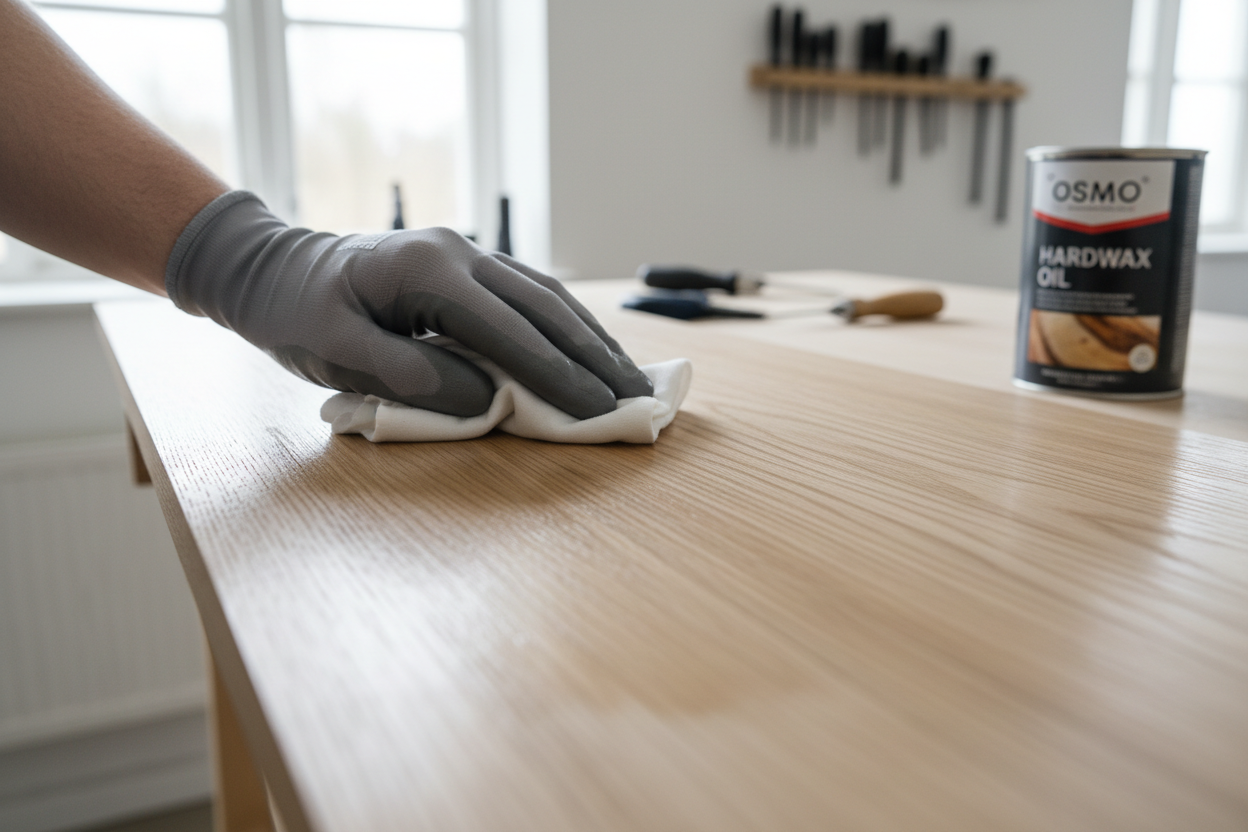
Discover why NOIR.DESIGN chooses Osmo Hardwax Oil for premium hardwood pieces. An in-depth guide covering application techniques, performance benefits, and real-world results from our workshop.

Weiterlesen